Alcázar of the Christian Monarchs
A Palimpsest of Power in Córdoba City
This precinct is the stratified memory of Córdoba. Located on the banks of the Guadalquivir, its walls guard over two thousand years of history.
It was the palace of Roman governors and a Visigothic citadel. The Umayyad emirs transformed it into an oasis of water and power, and after the Reconquest in 1236, it became the fortified residence of the Castilian monarchy. Here, Isabella and Ferdinand planned the conquest of Granada and, within its towers, Christopher Columbus presented the project that would completely change the geopolitical board in 1492.
Secrets and Curiosities
Beneath its mosaics and behind its battlements hide tales of faith, torture, discoveries, and ancient art.

In 1486, in the Hall of Mosaics (or the old Keep Tower), Christopher Columbus presented his “Enterprise of the Indies” to the Catholic Monarchs for the first time. It was here that the voyage uniting two worlds began to take shape.

For three centuries (1490-1821), the Alcázar ceased to be a palace and became the fearsome headquarters of the Tribunal of the Holy Office. Its basements went from being Arab baths to dungeons where the fate of heretics and converts was decided.

The interior museum guards a Roman sarcophagus from the 3rd century AD of incalculable value. Its reliefs show the gates of the underworld ajar, a pagan allegory about the transit between life and death carved from a single piece of marble.

Alfonso XI ordered the construction of baths for his mistress, Leonor de Guzmán. Although Christian, they used Muslim techniques and aesthetics: star-shaped skylights in the vaults to create an intimate atmosphere of steam and light.

The immense Albolafia waterwheel, next to the castle, lifted water from the river to irrigate the orchards. Legend has it that Isabella the Catholic ordered it dismantled because the squeaking of the axle would not let her sleep.

The current collection of Roman mosaics does not originally belong to the building; they were found in the subsoil of the Plaza de la Corredera in 1959 and moved here for protection, creating a unique stone art gallery.
Architecture of the Alcázar of the Christian Monarchs

The Alcázar is a sober castle, with an almost square plan, topped by four towers that define its silhouette and surrounded by gardens that evoke paradise.
It is the current gateway to the precinct and the oldest of the Christian era. With a square plan and sober Gothic aesthetic, its walls are guarded by stone gargoyles and machicolations that once watched over access from the old city.
It stands imposing with its peculiar octagonal plan, a rarity in military architecture of the time. Conceived as the last defensive refuge (Donjon), its vaulted rooms symbolized the unshakable royal authority over Córdoba.
Unlike its sisters, it has a circular plan and faces the Guadalquivir River directly. Its ashlar architecture arranged in header and stretcher bond made it a solid bastion, later destined to guard the secret archives of the Holy Office.
Also known as the Watchtower (Torre de la Vela), it closes the defensive rectangle. Although the original structure succumbed to time, it was faithfully reconstructed in the 20th century, offering today the best overhead view of the ponds and gardens.
Formerly a Baroque chapel of the Inquisition (Chapel of San Eloy), this space was transformed into a sanctuary of Roman art. Its walls and floors today exhibit impressive mosaic treasures from the 2nd century, such as the famous Polyphemus and Galatea.
An immense oasis of 55,000 m² that materializes the dream of the Islamic paradise. Water runs staggered between fountains and cypresses in a Mudejar-inspired layout, presided over by statues of the Monarchs who walked these very paths.
Historical Timeline
Roman and Visigothic Era
The site functions as a river customs post and residence of the Roman Procurator. Later occupied by the Visigoths as an administrative center.
Andalusi Alcázar
The Umayyad emirs fortify the precinct. Gardens, hydraulic systems, and pavilions are built that would be the envy of the West.
The Christian Fortress
Alfonso XI the Just orders the construction of the current Gothic structure, defining the parade ground and the main towers.
Headquarters
The Catholic Monarchs settle here. They direct the War of Granada and receive Christopher Columbus. Infanta Maria of Aragon is born in the Alcázar.
Seat of the Inquisition
Isabella and Ferdinand cede the building to the Holy Office. It becomes a court and prison, undergoing numerous internal reforms to create cells.
Monument and Garden
After serving as a civil and military prison, it passes to the City Council. A comprehensive restoration begins, and the current monumental gardens are created.
Image Gallery


Plan Your Visit
“A walk through history between walls and fountains”
Visiting Hours
Tuesday to Friday: 08:30 – 20:45
Saturdays: 08:30 – 16:30
Sundays: 08:30 – 14:30
Closed Mondays (except holidays)Information
Night show “Raíces”
General Admission: 5€
Free for Córdoba residents
Location
Plaza de los Santos Mártires, s/n, 14004 Córdoba
More Castles in Córdoba Province
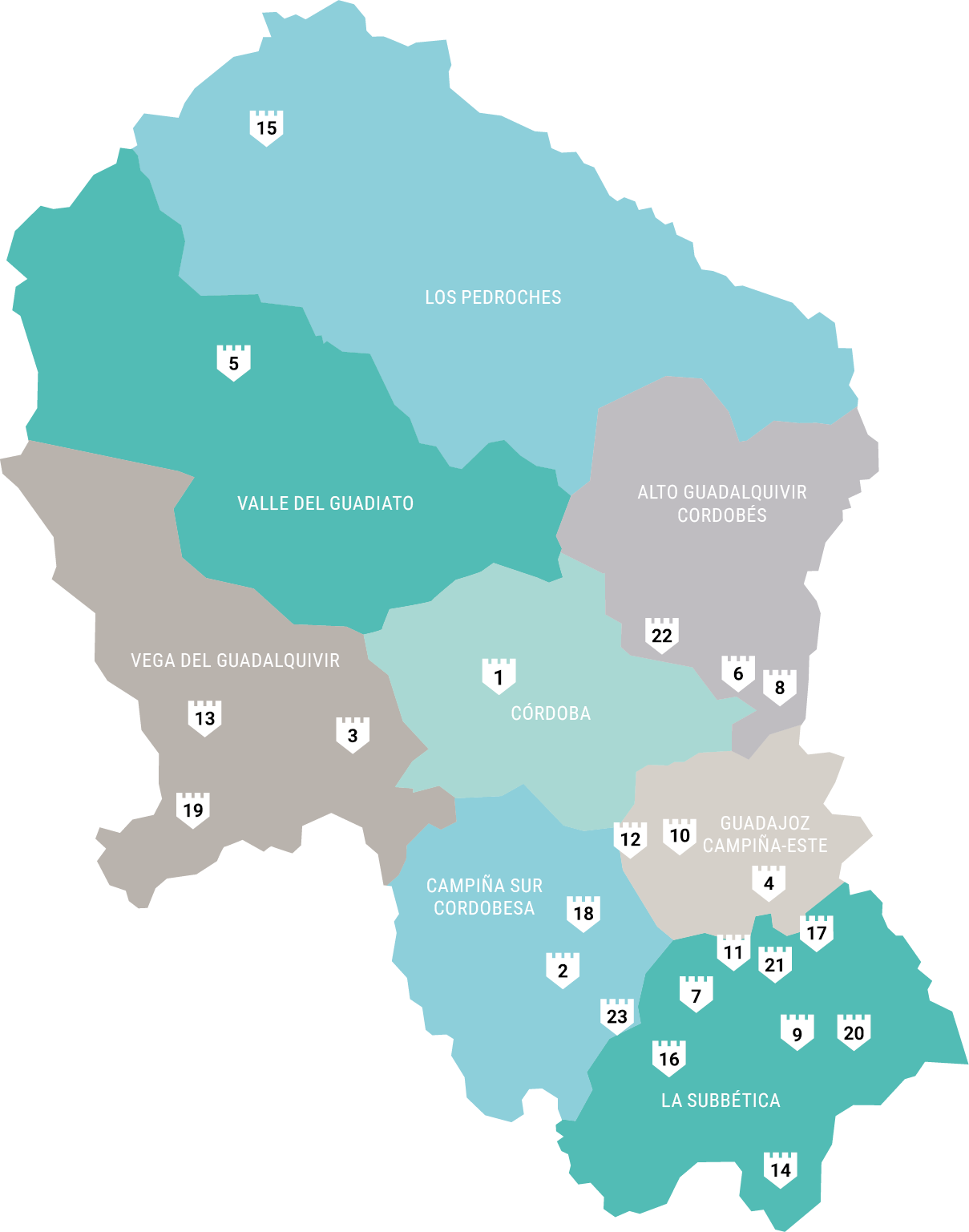
Discover the complete defensive network. Click on the map numbers or use the search engine below.