Castle of Montilla
Palace of the Lords of Aguilar
This monument is a survivor. Born as an Iberian oppidum and transformed into an Islamic fortress, it reached its zenith as the impregnable palace of the Lords of Aguilar, cradle of Gonzalo Fernández de Córdoba.
In 1508, the wrath of Ferdinand the Catholic ordered its total demolition as an exemplary punishment. But stone has a memory: the monumental Alhorí (ducal granary) rose upon its ruins in the 18th century, and today archaeology has revealed forgotten secrets, such as an intact medieval wine press.

Secrets and Curiosities
Between the demolished foundations and the baroque granary, the castle holds stories of war, wine, and royal punishment.

In 1453, Gonzalo Fernández de Córdoba, the Great Captain, was born here. He grew up within frontier walls, learning the siege warfare that would later revolutionize war in Europe.

On July 19, 1508, Ferdinand the Catholic ordered the demolition of the castle to punish the “pride” of the Marquis of Priego. Towers and walls were razed to their foundations.

Recent excavations (2023-24) have unearthed an industrial wine press from the 15th century, proving that wine was a strategic asset for the House of Aguilar.

Upon the military ruin, the Dukes of Medinaceli built an immense baroque granary in 1722. What we see today is not the castle, but this palace of wheat.

Beneath the medieval fortress, an aristocratic Iberian necropolis has appeared. The hill has been a place of power and death for 2,500 years.

Legend and Cervantes link the castle ruins to witches’ covens led by the famous sorceress “La Camacha,” prosecuted by the Inquisition.
Architecture and Functions of Montilla Castle
A unique site where the stumps of the razed medieval fortress coexist with the majesty of the illustrated 18th-century granary.
This imposing building of golden ashlar is not a fortification, but a monumental 18th-century granary. Built by the Dukes of Medinaceli to store the “third” of the harvests, it symbolizes the economic power of the nobility in the Modern Age.
Of the proud tower where the Great Captain was born, only the foundations and wall starts remain today. Its destruction in 1508 was so exhaustive that it became an involuntary quarry, although its floor plan reveals the magnitude it once had.
An exceptional archaeological discovery: wine production structures integrated into the military compound. Treading pools and channels from the 15th century show that the castle was also an agri-food production center.
On the northern flank, remains of rammed earth towers from the Islamic period are preserved. These structures, older than the Christian manorial castle, were reused and encompassed in the later construction, even serving as foundations for the Alhorí.
At the deepest level of the site, the remains of a fortified Iberian settlement can be seen. The terraced urbanism and burials found confirm that the hill was a center of local power long before Rome.
The interior of the Alhorí has been converted into a modern interpretation center. Through technology and original pieces, it narrates the life of Gonzalo Fernández de Córdoba and the military evolution of his time.
Chronological History
Iberian Oppidum
Fortified Turdetanian settlement and necropolis on the hill, controlling agricultural production.
Manorial Castle
After the Christian conquest, the great Gothic fortress of the House of Aguilar is built. In 1453, the Great Captain is born here.
The Great Demolition
Ferdinand the Catholic orders the total destruction of the castle as punishment for the rebellion of the Marquis of Priego.
The Alhorí
The Dukes of Medinaceli build the monumental granary on the esplanade of the ruins, reusing materials.
Public Property
The City Council acquires the site to recover it as a cultural and tourist space.
Key Findings
The latest excavations reveal the medieval wine press and the necropolis, rewriting the site’s history.
Image Gallery


Plan Your Visit
“Discover the fortress of the Great Captain and the Alhorí”
Opening Hours and Access
Monday to Friday: 10:00 – 14:00
Saturdays and Sundays: 10:00 – 13:00
Afternoons (Friday and Saturday): 16:30 – 18:30
July and August: Monday to Sunday from 10:00 – 14:00 (closed in the afternoons)
Information and Reservations
Phones: +34 670 71 64 22 / 672 78 05 21
turismo@montilla.es
Calle Iglesia, s/n
Don’t Miss
The Local Historical Museum and the views from the Alhorí viewpoint.
More Castles in Córdoba Province
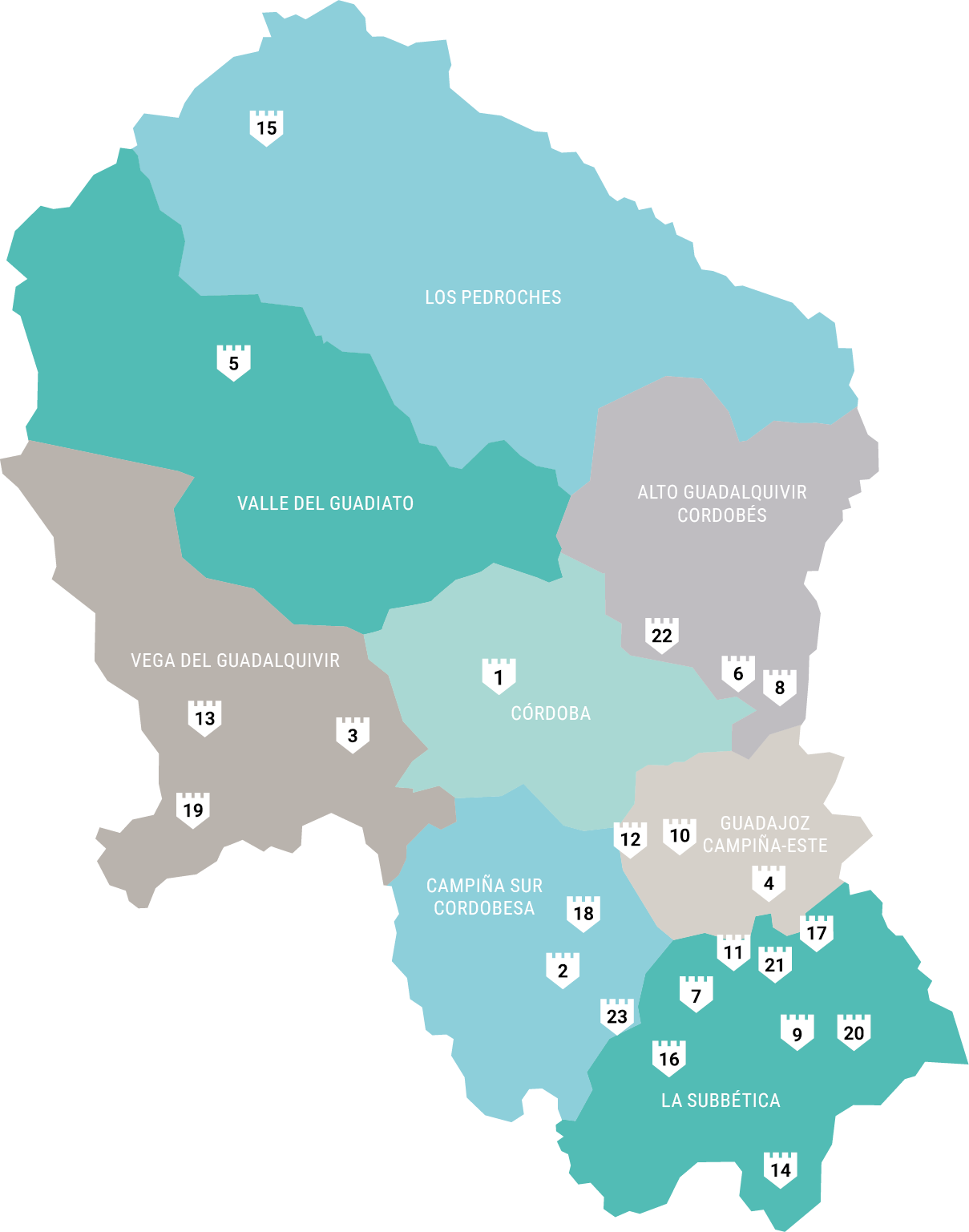
Discover the complete defensive network. Click on the map numbers or use the search engine below.