Lucena Castle
Castle and Museum
In the heart of Lucena, this castle is a living archive of Eliossana, the “City of the Jews.” Its stones have witnessed the coexistence of cultures and one of the key moments in Spanish history.
It was here where the last Nasrid king, Boabdil the Young, suffered captivity in 1483 after being captured at the Battle of Lucena. Today, transformed into an Archaeological and Ethnological Museum, it guards everything from Neanderthal vestiges to Sephardic memory.

Secrets and Curiosities
From a king’s prison to the secrets of a thousand-year-old Talmudic academy.

After the Battle of Lucena (1483), Sultan Boabdil was confined in the Keep (Torre del Homenaje). His capture here changed the course of the Granada War and the Reconquista.

Lucena was an exclusively Jewish city for centuries. The castle preserves the memory of its famous Talmudic Academy and unique Hebrew tombstones like that of Rabbi Lactosus.

The Tower of Moral, which gives the castle its name, has a unique octagonal floor plan. Originally battlemented, it was covered with a Baroque vault in the 18th century.

The museum houses findings from the Angel Cave, a key Pleistocene site that proves hominid occupation in the area more than 300,000 years ago.

Local legend says the true “sigh of the Moor” happened here, looking toward Granada from the tower terrace, lamenting his lost kingdom.

Night tours explore the inexplicable phenomena of the castle, telling of shadows on the wall-walk and echoes of ancient battles within its walls.
Architecture of the Castle of Moral

A lowland castle with a double enclosure, moat, and a palatial core that evolved from a military fortress to a noble residence.
This octagonal structure is the identity of the castle. Located in the northwest corner, it stands out for its Baroque brick roof that replaced the original battlements. Its polygonal shape improved defense by eliminating blind spots, a significant architectural innovation of its time.
With a square floor plan and robust masonry, it was the last defensive bastion and the place of confinement for King Boabdil. Its interior, austere and dark, contrasts with the views that dominated the old Jewish medina and the paths toward the Nasrid kingdom.
The castle features a quadrangular floor plan defended by towers at the corners and a perimeter moat that isolated it from the city. Originally, it had a double set of walls and a barbican, a typical defensive system for lowland fortresses exposed to direct sieges.
The nerve center of the fortress is its parade ground. Around this open space, troop quarters, warehouses, and the warden’s residence were organized. Today, landscaped and restored, it serves as the main distributor for the museum.
The castle’s ancient rooms have been adapted to house the Archaeological and Ethnological Museum. Its display cases show the rich history of Lucena, from Paleolithic bifaces to Sephardic ceramics and remains from the Battle of Martín González.
After the Christian conquest, the fortress lost its purely military character to become the residence of the Marquises of Comares. Large windows were opened and rooms decorated, softening the harshness of the medieval stone.
Chronological History
Eliossana
Lucena flourishes as an independent Jewish city. It is believed that the original core of the fortress dates from this era of splendor.
Almohad Invasion
The Almohads devastate the Jewish city. The fortress is reinforced for military control of the territory against the Christian advance.
Christian Conquest
Ferdinand III incorporates Lucena into Castile. The castle becomes a key piece of the “Banda Morisca” borderland.
Boabdil’s Imprisonment
The King of Granada is captured at the Battle of Lucena and imprisoned in the castle, marking the beginning of the end of the Reconquista.
Transformation
The fortress loses its battlements and is renovated as a residential palace, with the current tower roofs being constructed.
National Monument
Declared a National Historic Monument. Today it is the headquarters of the Archaeological Museum and a symbol of the city.
Image Gallery


Plan Your Visit
“Discover Boabdil’s prison and the Pearl of Sefarad”
Opening Hours
Monday to Friday: 10:00 – 18:00
Saturdays: 12:30 – 18:00
Sundays: 12:30 – 15:00
Last entry 30 min before closingTickets and Contact
General: €4.50 | Reduced: €3.00
📞 +34 957 50 36 62
📧 lucena@ciudadesmedias.org
Managed by Fundación Tu Historia
Location
Plaza del Coso, s/n (Historic Center)
14900 Lucena, Córdoba (Spain)
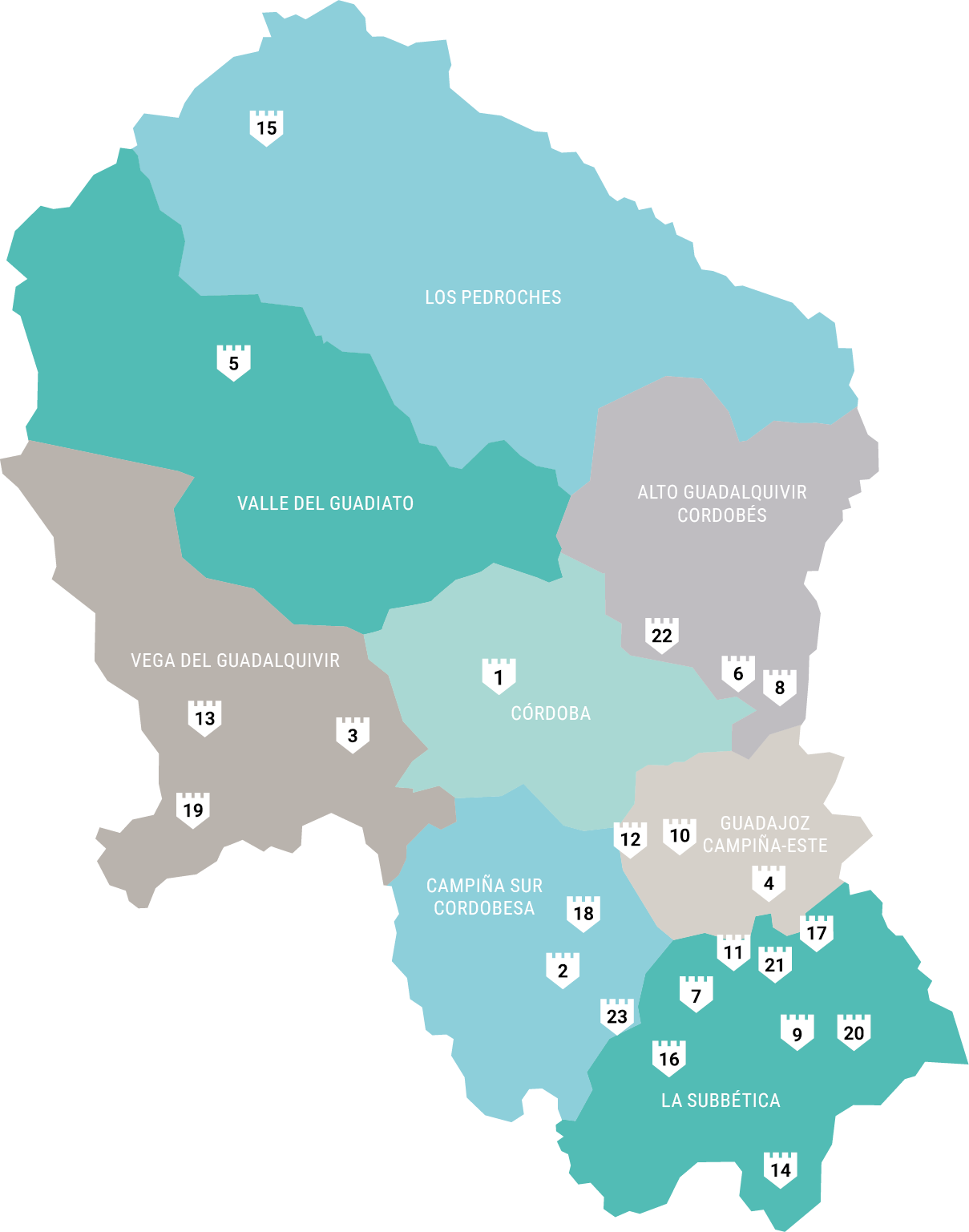
More Castles in Córdoba Province
Discover the complete defensive network. Click on the map numbers or use the search bar below.