Belalcázar Castle
The Castle of the Sotomayor and Zúñiga
A stone giant stands in the north of the province of Córdoba. It is the Castle of the Sotomayor and Zúñiga, a masterpiece of military Gothic architecture.
Built in the 15th century over the remains of an ancient Roman and Muslim fortress (“Gafiq”), it stands out for its impressive 47-meter Keep. After suffering the ravages of the Peninsular War and centuries of abandonment, today it is reborn completely restored.
Secrets and Curiosities
The stones of Belalcázar tell more than just battles. They hide literary dedications, specters turned into monks, and impregnable walls.

Did you know that Cervantes dedicated the first part of Don Quixote to the owner of this castle? It was the VIII Count of Belalcázar (and Duke of Béjar), forever linking the fortress with the masterpiece of literature.

Look where the Keep stops being square and becomes rounded. That transition is marked by a chain sculpted in granite. It is the symbol of the Zúñiga, “embracing” the power of the Sotomayor.

In 1811, an English division of 5,000 men besieged the castle, defended by only 40 Frenchmen. After 200 cannon shots that barely scratched the walls, the English gave up and withdrew. An almost indestructible fortress!

Legend says that young Count Juan gave up everything to become a friar after a nocturnal duel. While fighting for a lady, his rival’s cape fell and revealed the cross of Alcántara… it was a specter! Thus Fray Juan de la Puebla was born.

The castle could become an island. A system of sluices allowed the Caganchas stream to be diverted to flood the moats at will. In addition, an albarrana tower protected a waterwheel to ensure drinking water even under siege.

It wasn’t just wars, but also the neighbors who damaged the building. In the 19th century, for fear that the French would return, dismantling parts was permitted. Today, many houses in the town have noble stones from the palace in their facades.
Architecture of the Fortress

The complex is organized into two precincts: the manorial castle at the highest point and an irregular outer wall that embraces the hill, defended by multiple towers.
The most emblematic silhouette of the region. At 47 meters, it is a granite colossus that defies gravity. Its design evolves as it ascends: it starts square, becomes octagonal, and culminates with cylindrical sentry boxes, an aesthetic audacity that served as an unmatched lookout.
The fortress is not just the tower; it is a complex system of walls that fold into the rocky terrain. Built in masonry and reinforced with massive towers, this stone belt protected the manorial residence and served as the first line of fire against any siege.
Although the Keep gets the fame, the perimeter features advanced towers designed for crossfire. These structures allowed harassing the enemy from the flanks before they could even approach the main wall.
In a fortress, water is life. This walled structure descended the slope to the pillar or natural spring, protecting the path of the water carriers. It was the umbilical cord that prevented the castle from dying of thirst during prolonged sieges.
Attached to the military structure, this residential body softens the harshness of war. With its windows profusely decorated by Hernán Ruiz I, it marks the moment when the Sotomayor ceased to be just warriors to become cultured patrons of the Renaissance.
Hidden in the bowels of the parade ground, this deposit excavated in the living rock was the garrison’s life insurance. Its capacity and strategic location ensured survival when the outer wells or the coracha fell into enemy hands.
Chronological History
The Medina of Gafiq
Emiral and Almohad era. An important citadel and Muslim population is consolidated on the hill, utilizing a previous Roman base.
Start of Works
John II grants the lands to Gutierre de Sotomayor. Construction of the Gothic castle begins over the ancient Arab fortress to control the territory.
Manorial Culmination
Doña Elvira de Zúñiga finishes the works after her husband’s death. The great Keep and its eight sentry boxes are completed.
The Renaissance Touch
Francisco de Sotomayor commissions Hernán Ruiz I to build an attached residential palace, with large windows and Plateresque decoration.
French Occupation
During the Peninsular War, Napoleonic troops use it as a warehouse. It is later shelled by the English and partially dismantled.
Comprehensive Restoration
After being acquired by the Regional Government of Andalusia, an ambitious restoration is completed, consolidating the structure and opening the castle to public visits.
Image Gallery


Plan Your Visit
“Climb to the highest point in the province of Córdoba”
Visiting Hours
Weekends and holidays
Guided tours with prior reservation
Checking availability is recommendedInformation
Duration: Approx. 1 hour and 30 min.
Free (Reservation required)
Location
Calle Castillo, s/n, 14280 Belalcázar, Córdoba
More Castles in Córdoba Province
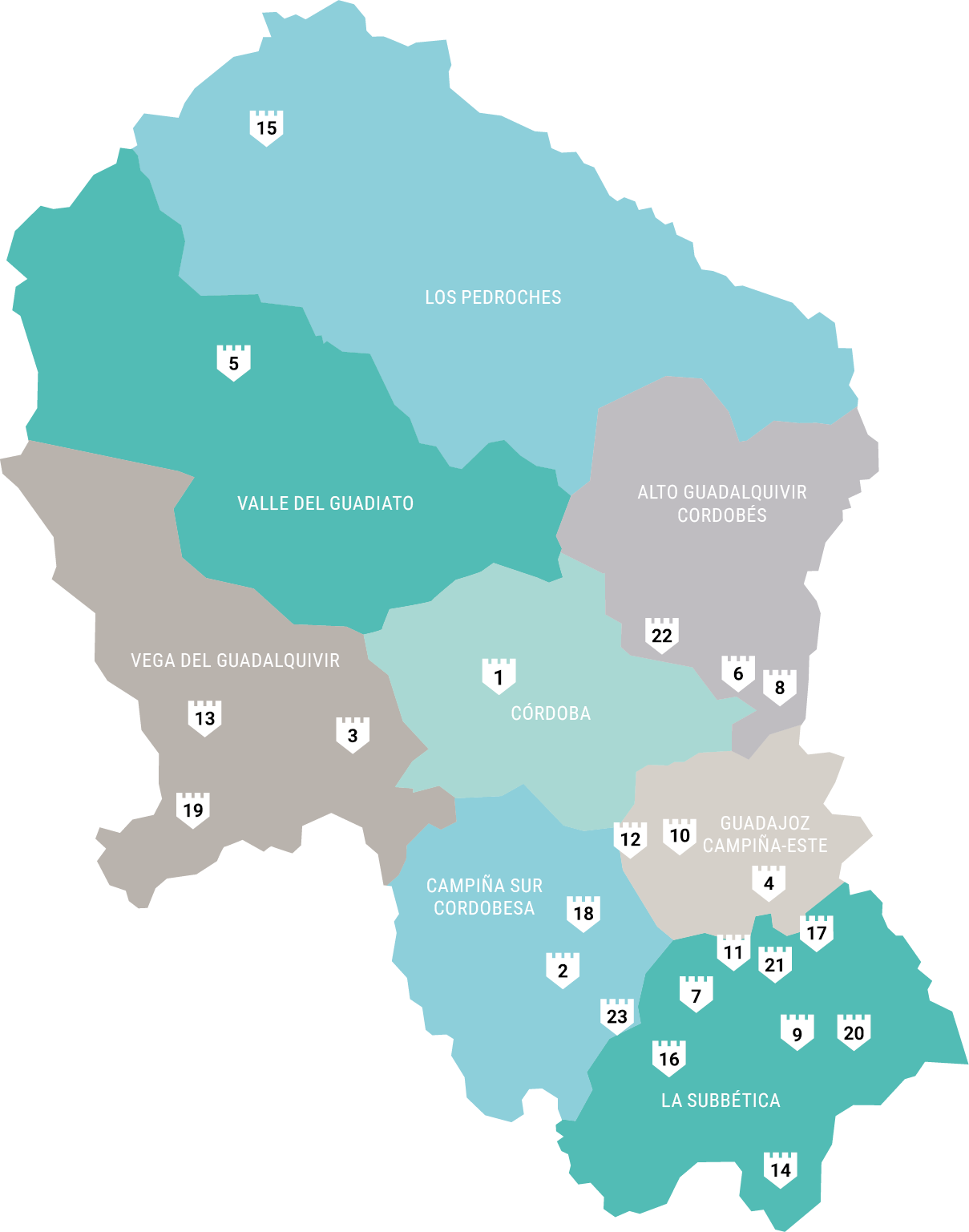
Discover the complete defensive network. Click on the map numbers or use the search bar below.