Carcabuey Castle
The Castle of Fidelity
In the heart of the Subbética rises a “rocky castle” that dominates the pass between Córdoba and Granada. It was born over a Roman oppidum, became Karkabuliyya, a rebel bastion of Ben Mastana in the 9th century, and was the key to the Castilian border.
Known as the “Castle of Fidelity” due to the legend of Nuño Tello, who preferred to sacrifice his daughter rather than surrender the square, today its walls guard the Chapel of the Virgin of the Castle, a symbol of Carcabuey’s identity.

Secrets and Curiosities
Between its millenary cisterns and its towers of homage, stories of betrayal, loyalty, and miracles are intertwined.

In 1282, Nuño Tello refused to surrender the castle to the rebel Sancho, despite his daughter fleeing with the enemy. After the war, Nuño committed suicide before serving the new king, writing: “If I cannot be loyal with my spirit, here is my body.”

In the 9th century, Sa’id Ben Mastana, an ally of Omar Ben Hafsun, fortified Karkabuliyya and resisted the siege of Emir Abd Allah himself, making the castle a symbol of Muladi dissent.

There is a great debate about the monumental exterior cistern (aljibe). While tradition calls it Roman, recent studies suggest an Islamic origin (10th-12th c.), vital for resisting sieges at this height.

After losing its military function, the parade ground was transformed into a sacred space. The Chapel of the Virgin of the Castle, rebuilt after an earthquake in 1951, is the spiritual heart of the town.

In 1245, Ferdinand III donated the town to the Order of Calatrava. The knights reinforced the castle, establishing the Tower of Homage as a symbol of their feudal power on the frontier.

The interior of the chapel houses an impressive collection of votive offerings (ex-votos: crutches, wax figures, paintings) that tell of centuries of popular gratitude for the Virgin’s favors.
Architecture of Carcabuey Castle

A fortress organically adapted to the limestone rock, with towers that defy the abyss and walls that tell the story of the frontier.
This imposing prismatic volume dominates the enclosure. It is a solid masonry construction with ashlar reinforcements at the corners, typical of the architecture of the Order of Calatrava. It served as the warden’s residence and the final stronghold in case of siege, being practically impregnable.
Carcabuey Castle is the perfect example of “rocky architecture.” Its walls do not follow a regular geometric path but meander, adapting to the edges of the limestone cliff, making the geology itself its primary defense.
Located outside the main enclosure, this water reservoir is an exceptional piece of engineering. Excavated into the living rock, it guarantees vital supply. Its chronology is debated, but its technical execution recalls large Roman cisterns or Caliphal hydraulic engineering.
In addition to the square Tower of Homage, the enclosure features three towers with a semi-circular floor plan. These structures, likely added in later stages (13th-14th centuries), improved defense by offering curved surfaces that better deflected projectiles.
In the center of the parade ground, where soldiers once stood, stands the Chapel of the Virgin of the Castle. In Baroque style with a Latin cross plan, it represents the transformation of the military space into a place of worship and popular pilgrimage.
The sections that close the enclosure are mainly built in masonry (unworked stone joined with mortar). This fast and resistant technique is characteristic of border fortifications that had to be constantly repaired after attacks.
Chronological History
Origins
Early occupation of the hill. Possible Iberian oppidum and later Roman use, the base for the medieval fortification.
The Resistance of Karkabuliyya
Emir Abd Allah sieges the rebel castle of Ben Mastana. The fortress resists, demonstrating its strategic value during the Fitna.
Conquest and Calatrava
Pact of submission to Castile and subsequent donation to the Order of Calatrava, which reinforced the border defenses.
Legend of Fidelity
Heroic episode of Nuño Tello during the Castilian civil wars, refusing to surrender the castle to Prince Sancho.
Nasrid Interregnum
Granada temporarily recovers Carcabuey until Alfonso XI definitively reconquers it before the Battle of Salado.
Resilience
After an earthquake damages the chapel, the town joins together to finance and execute its restoration, saving the heart of the castle.
Image Gallery


Plan Your Visit
“Climb to the Chapel and contemplate the Subbética”
Access
Free visit to the outer enclosure
Interior and Chapel: Check availability
Tourist Office: +34 957 55 30 18
Carcabuey City CouncilFestivities and Location
Castle Festivals: September 7th and 8th
Cerro del Castillo, s/n
14810 Carcabuey, Córdoba (Spain)
Environment
Located in the heart of the Sierras Subbéticas Natural Park, ideal for hiking.
More Castles in Córdoba Province
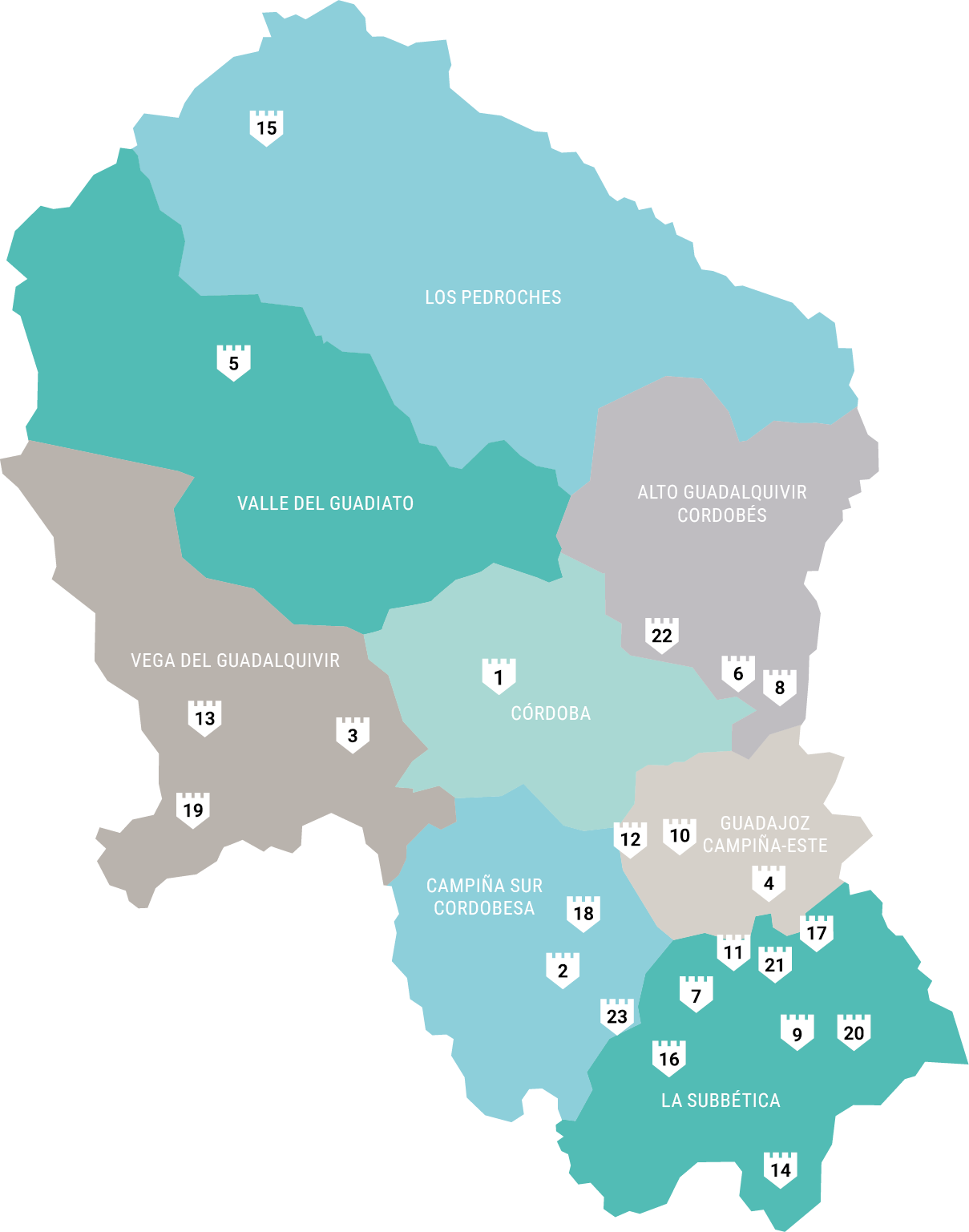
Discover the complete defensive network. Click on the map numbers or use the search bar below.