El Carpio Castle
The Tower of Garci Méndez
The Tower of Garci Méndez not only watches, but creates. Its construction in 1325 by the lord of Jódar provoked the birth of the town of El Carpio at its feet, displacing the old power of Alcocer.
It is a unique example of incastellamento, where the fortress generated the town. Designed by the master builder Mohamad, it combines military robustness with Mudejar refinement in its interior vaults, guarding centuries of history of the Sotomayor and Haro families.
Secrets and Curiosities
From Renaissance hydraulic engineering to underground Baroque jewels.

The foundation stone of 1325 names “Master Mohamad” as the builder. An Islamic expert hired by a Christian lord, proof of technological transfer on the frontier.

In the 16th century, a unique engineering work was built on the river: three huge waterwheels driven by the current to lift water to the crops, designed by engineer Ambrosio Mariano.

Unlike other Christian towers with stairs, this one possesses ramps in the style of Arab minarets (like the Giralda). This allowed supplies and even horses to be brought up to the defensive summit.

The current Municipal Theater sits on the authentic basements of the fortress. These underground vaults originally functioned as an immense secure food bank.

Gaspar de Haro y Guzmán (17th century), Marquis of El Carpio, was a “Prince of the Baroque” who amassed an art collection with works by Velázquez and Titian, elevating the prestige of the lineage.

Beneath the manorial complex hides a jewel of funerary art: the Crypt of the Marquises. An underground space of marble and jasper known as “the little Escorial.”
Mudejar Architecture

A tower that is a vertical “mini-palace,” designed with ramps for logistics and cloister vaults for nobility.
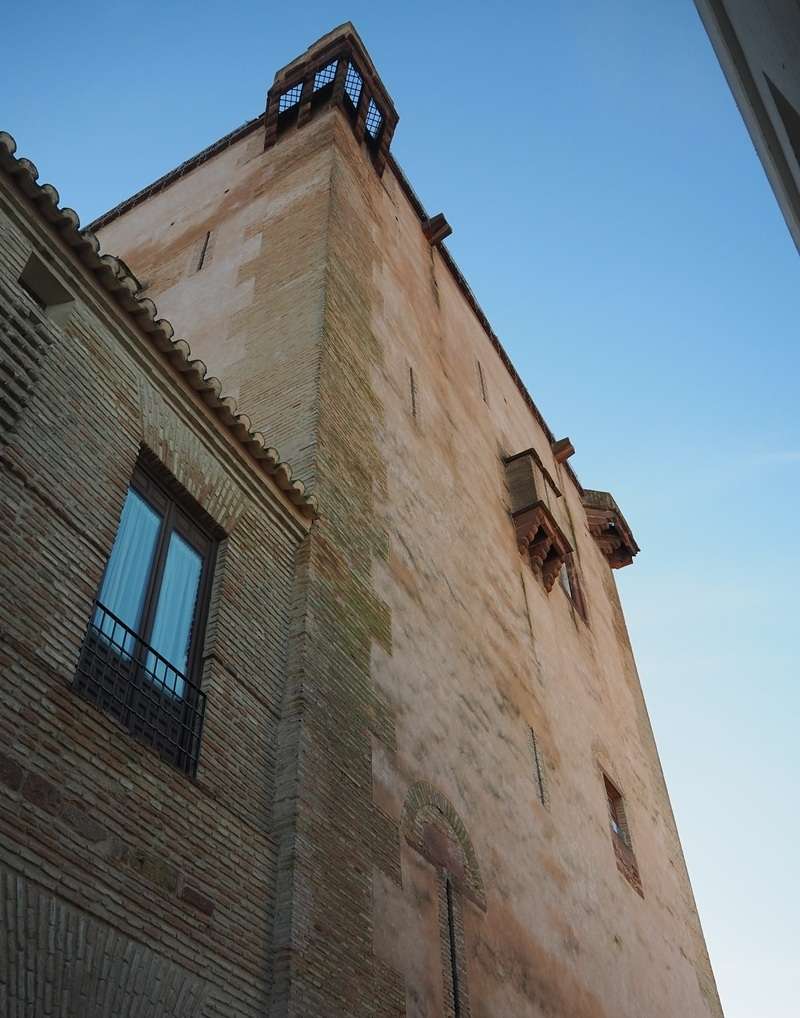
This imposing 26-meter tower is the heart of the fortress. Built in masonry banded with courses of brick, its Mudejar design combines defensive military function with residential use, being a visual landmark that dominates the Cordovan countryside.
The interior reveals Andalusi refinement. The rooms are covered by complex brick vaults (cloister and groin) that distribute weight and provide a palatial elegance unusual in such a martial structure.
An architectural rarity defines its core: there are no stairs, but a system of continuous ramps. This design allowed riding a horse up to the roof and facilitated the transport of artillery and heavy supplies to the upper levels.
At the foot of the castle, in the bed of the Guadalquivir, stands this monumental work of hydraulic engineering. A system of waterwheels and weirs from the 16th century designed to lift water and irrigate the orchards of the marquisate.
Below ground level, the fortress hides a network of galleries and granaries. These spaces, vital for subsistence during sieges and droughts, serve today as the foundations of the Municipal Theater.
The austerity of the walls is broken by geminated windows and pointed horseshoe arches in brick. These openings not only illuminate the noble rooms but frame the landscape as living pictures of seigniorial dominion.
Chronological History
Foundation
Garci Méndez de Sotomayor orders the tower built. Master Mohamad directs the work, giving rise to the town of El Carpio.
The Cranes
Construction of the hydraulic complex on the Guadalquivir River for crop irrigation, a pioneering engineering work.
Marquisate
Philip II elevates the lordship to the Marquisate of El Carpio in favor of Diego López de Haro, uniting the Sotomayor and Haro lineages.
The Collector Marquis
Gaspar de Haro y Guzmán takes the name of El Carpio to European courts, amassing an unparalleled artistic treasure.
Ducal Palace
The civil Ducal Palace is built, moving the manorial residence out of the medieval tower, which remains as a symbol.
Living Culture
The tower is open to visitors and the old granaries house the Municipal Theater, keeping the building as the heart of the town.
Image Gallery


Plan Your Visit
“Ascend the ramps to the sky of El Carpio”
Hours and Rates
Wednesday to Sunday: 10:00 – 14:00
Saturday afternoons: 16:00-18:00 (Win.) / 19:00-21:00 (Sum.)
Entry: 2€ (Free on Fridays)
Closed Mondays and TuesdaysContact
Tourist Office: 957 18 05 65
City Council: 957 18 00 21
Calle Castillo, 3 (Next to the Ducal Palace)
Don’t Miss
The Cranes in the river and the Municipal Theater under the square.
More Castles in Córdoba Province
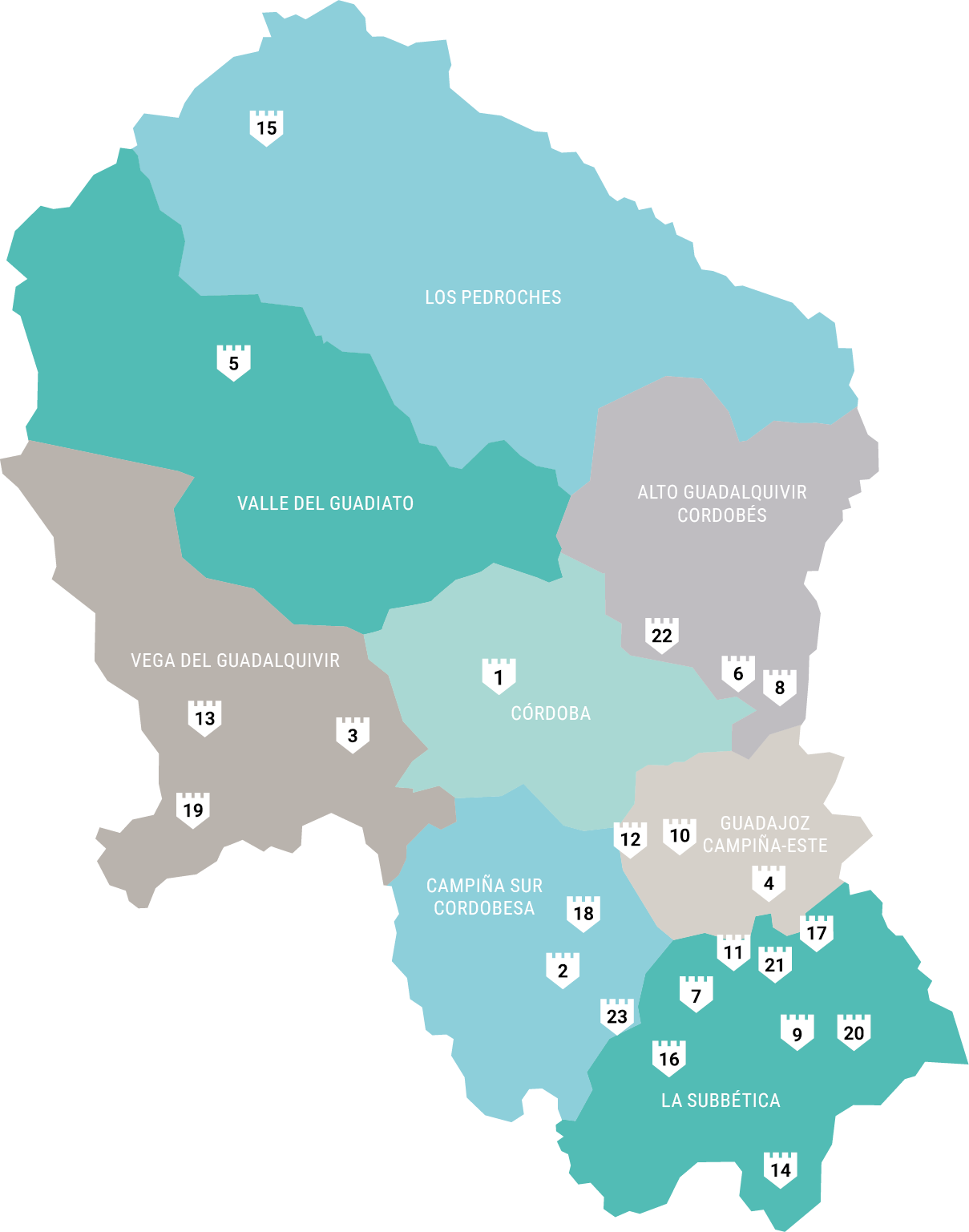
Discover the complete defensive network. Click on the map numbers or use the search bar below.