Castle of Luque
Castle of Hisn Lukk “The Venceaire”
Perched on a limestone crag at an altitude of 612 meters, Luque Castle (Hisn Lukk) is a palimpsest narrating a thousand years of history. From here, the routes of the Subbética and the Nasrid border were once commanded.
Popularly known as “El Venceaire,” it was a rebel bastion for Omar Ben Hafsun, an Almohad fortress, and the manor of the Venegas family. Its walls hold not only medieval memories but also 20th-century scars, having formed part of the Republican defensive line during the Spanish Civil War.

Secrets and Curiosities
Hidden among its rocks are uncertain etymologies, Muladi rebellions, and concrete bunkers.

While tradition claims it “defeats the air” (vence al aire) due to its height, philology suggests it derives from “Albenzaide,” an Arabic lineage (Banu Zayd) phonetically distorted by Christian conquerors.

At the end of the 9th century, the Muladi leader Omar Ben Hafsun fortified this crag to challenge the Emirate of Córdoba. Hisn Lukk was a key piece in the Al-Andalus “Fitna” or civil war.

At the foot of the medieval castle, concrete bunkers from the Civil War (1938) still survive. A brutal contrast between Islamic masonry and 20th-century military architecture.

The 21st-century restoration rejected historical falsification. It uses modern materials and “floating” stairs that allow the original to be clearly distinguished from the new.

Beneath the castle lies a cave with Neolithic paintings. Legend says an “enchanted Moorish woman” dwells there, whose laments can be heard on Midsummer’s Eve (San Juan).

Following the Christian conquest, the castle passed to the House of Venegas by grant from Henry II (1374). They transformed the austere military fortress into their noble residence.
Architecture of Luque Castle

An irregular polygon organically adapted to the abyss, where albarrana towers coexist with contemporary interventions.
This impressive bastion is an albarrana tower, separated from the main wall to improve its defense. Standing at 26 meters high, it dominates the entire complex and the surrounding region. Originally, access was gained via a bridge or arch connecting it to the enclosure, making it a safe refuge even if the walls fell.
Located at the southern end, this tower blends into the vertical precipice. Its construction takes advantage of the natural defense provided by the steep terrain. Inside, it houses a room covered with a barrel vault, possibly used for monitoring the most inaccessible and dangerous area of the castle.
In a rocky fortress without its own springs, water is life. The castle preserves two important Almohad-era cisterns, partially excavated into the rock and covered with (reconstructed) vaults. These reservoirs collected rainwater from the roofs and courtyard, ensuring survival during prolonged sieges.
The modern architectural intervention has provided the castle with a unique access point: a “floating” metal staircase. This contemporary structure allows visitors to overcome the incline and reach the upper enclosure without altering archaeological strata or falsifying history with mimetic stone reconstructions.
The castle features a lower walled enclosure known as an albacara. In times of danger, this space served as a refuge for the townspeople and their livestock, protecting them behind a first defensive line before reaching the upper military alcazaba.
The central space of the fortress organizes the distribution of the internal buildings. Although it appears today as an open space with natural rock floor and gravel, it once housed troop quarters, kitchens, a forge, and warehouses necessary for the garrison’s daily life.
Chronological History
The Fitna Rebellion
Omar Ben Hafsun fortifies Hisn Lukk as a bastion against the Emirate of Córdoba, taking advantage of its impregnable position.
Christian Conquest
Ferdinand III the Saint takes Luque through capitulation. The castle becomes part of the frontier “Banda Morisca.”
Venegas Lordship
Henry II grants the town to Egas Venegas. The fortress is adapted to serve as the family’s noble residence.
Spanish Civil War
Luque becomes a battlefront. The Alamillo Bunkers are built to control the railway line.
Comprehensive Restoration
An ambitious project recovers the castle’s volume using clearly differentiated contemporary architecture.
Image Gallery


Plan Your Visit
“Command the horizon from the Venceaire”
Management and Bookings
“Luque Land of Frontiers” Museum
Guided tours: Wednesday to Sunday
Hours: 10:00 AM – 2:00 PM
Advance booking essentialContact
📞 +34 957 667 675 (Museum)
📧 turismo@luque.es
Plaza de España, s/n (Reception)
Castle Access: C/ Bahondillo
Surroundings
Next to the Parish Church of the Assumption (“Cathedral of the Subbética”) and Enchantress’s Cave
More Castles in Córdoba Province
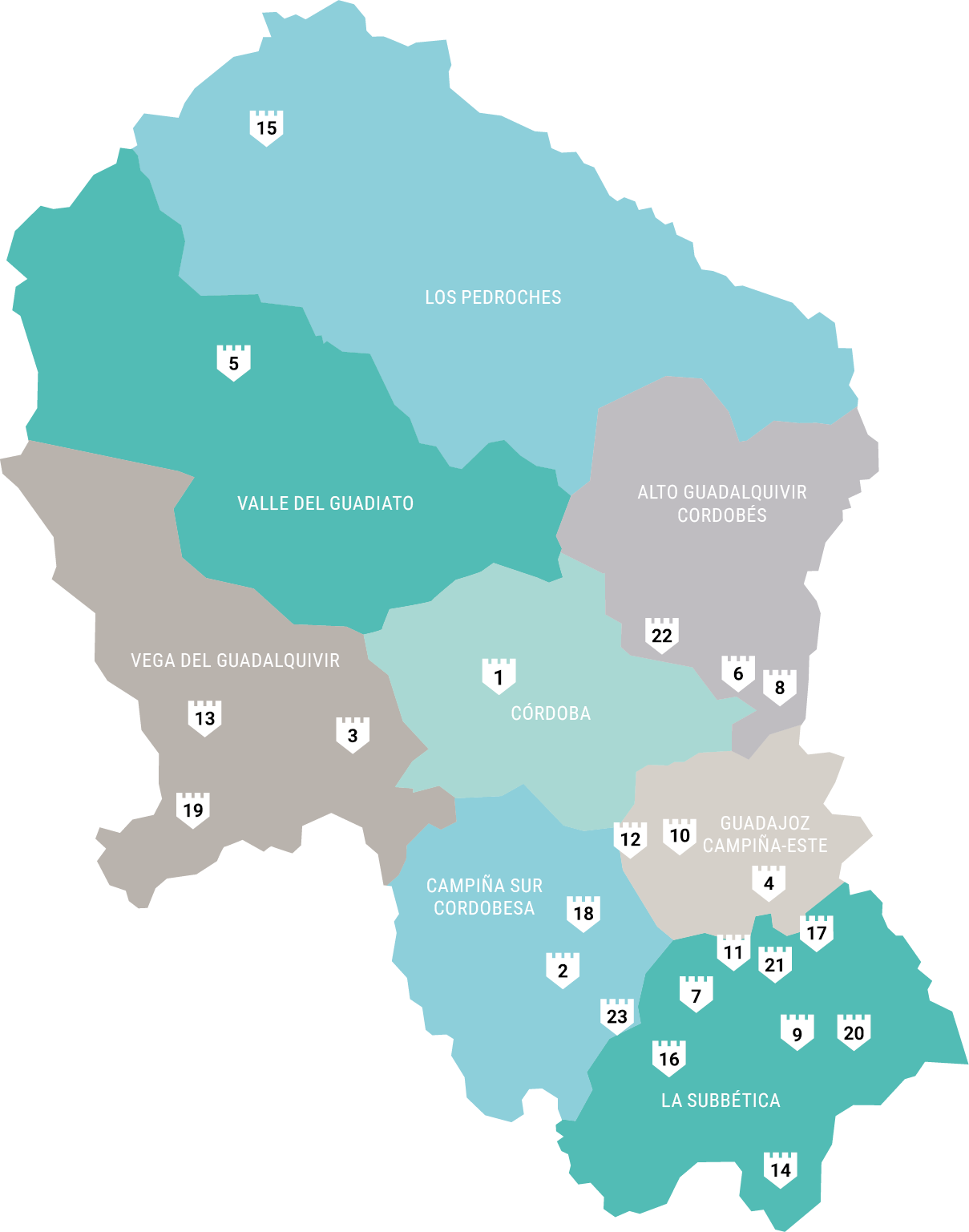
Discover the complete defensive network. Click on the map numbers or use the search bar below.