Cañete de las Torres Castle
The Ancestral Home of the Great Captain’s Lineage
This castle is the origin of one of the most powerful noble houses in Spain. Here, on the ruins of Roman Calpurniana and Islamic Hins Canit, the lordship of the Fernández de Córdoba was born in 1293.
Its keep is an architectural rarity, with brick vaults that link it to the castle of Biar. Legends of secret tunnels and the dreaded “Hairy Hand” echo within its walls, which today guard the historical and ethnographic memory of the town.
Secrets and Curiosities
From Almohad engineering to ghosts that scared children, the castle holds fascinating secrets.

A local legend tells that a giant hairy hand lived in the tower’s dungeon and caught children. A myth created to keep them from playing in the dangerous ruins.

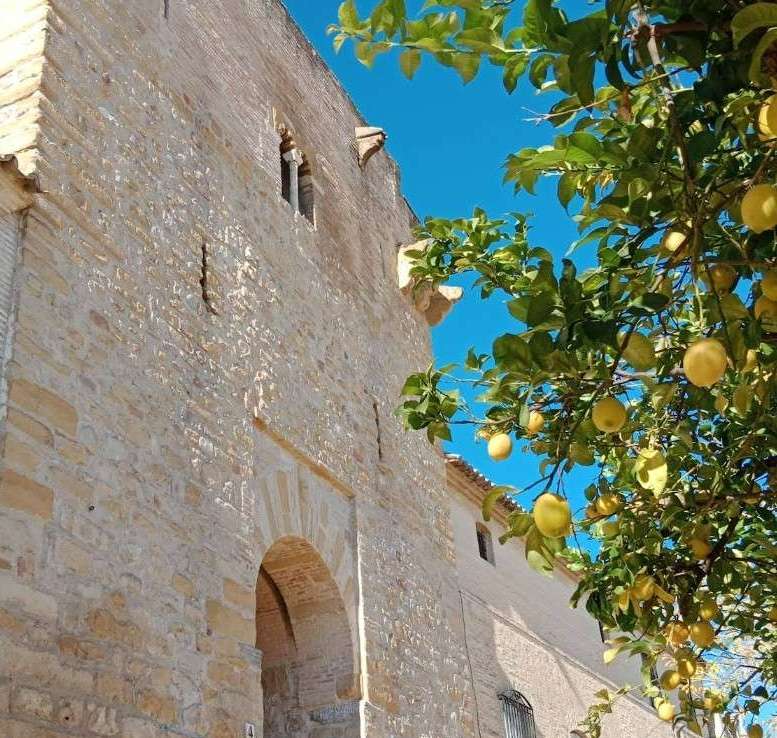
A Gothic-Mudejar mullioned window adorns the tower. Its frame decorated with chains has fed stories of captives and unbreakable loyalties.

It is said that three tunnels leave the castle towards distant estates and even the coast. Although exaggerated, the legend stems from real water mines and escape routes.

In 1293, King Sancho IV granted this castle to Alfonso Fernández de Córdoba. It was the first lordship of the family that would later dominate the entire region.

The vaults of the Keep are not made of stone, but of brick, using a complex technique similar to that of the Castle of Biar (Alicante), a rarity in the area.

Inside the tower, inscriptions made by prisoners from past centuries are preserved, silent testimonies of its use as a jail.
Architecture of Cañete Castle

An urban seigniorial castle that hides within it a jewel of medieval military engineering: its Keep.
This imposing tower, nearly 30 meters high, is the most prominent element. Rectangular in plan and with three levels, its three-meter-thick walls not only defended but also thermally insulated the food stored in its base (granary).
What makes this castle unique are its double-groin brick vaults inside the tower. This technique, rare in the military architecture of the area, suggests the hand of specialized master builders and stylistically links the tower with fortifications in the Levant like Biar.
A beautiful Mudejar-style mullioned window opens on the main façade. Its polylobed arches are framed by an alfiz decorated with a chain-shaped molding, a symbol of nobility and, according to legend, of captives.
Faithful to defensive tradition, the original door of the tower is located high up, accessible only by a ladder or drawbridge that could be removed. Today it is accessed by a modern entrance at ground level, but the original one remains visible above.
The interior of the fortress has exchanged weapons for memory. Its rooms now house the local Ethnographic Museum, where farming tools and everyday objects tell the story of the town that grew in its shadow.
The castle does not stand on virgin land, but on history itself. Its foundations rest on the remains of the Roman municipality of Calpurniana, reusing ashlars and structures from a continuous millenary occupation.
Chronological History
Calpurniana
The Roman municipality prospers in the place. Its structures will serve as a base for later fortifications.
Hins Canit
Emir Abdullah takes the Islamic fortress, which played a key role in the Fitna rebellion.
Christian Conquest
Ferdinand III incorporates the town into Castile, initially as royal land dependent on Córdoba.
The Lordship
Sancho IV grants the town to Alfonso Fernández de Córdoba, founding the territorial power of his lineage.
Keep
Construction of the great tower and its unique vaults, consolidating the seigniorial character of the castle.
Ethnographic Museum
The castle, declared a BIC (Site of Cultural Interest), opens to the public as a museum and viewpoint, recovering its centrality in the town.
Image Gallery


Plan Your Visit
“Enter the Keep and its Ethnographic Museum”
Access and Reservations
Arranged Visit
📞 957 18 30 00 (City Council)
📞 697 48 09 98 (Tourism)
Appointment requiredLocation
Plaza de España, s/n
14660 Cañete de las Torres, Córdoba
Next to the City Council
Don’t Miss
The views from the Tower terrace and the nearby neighborhood of Huerto del Francés.
More Castles in Córdoba Province
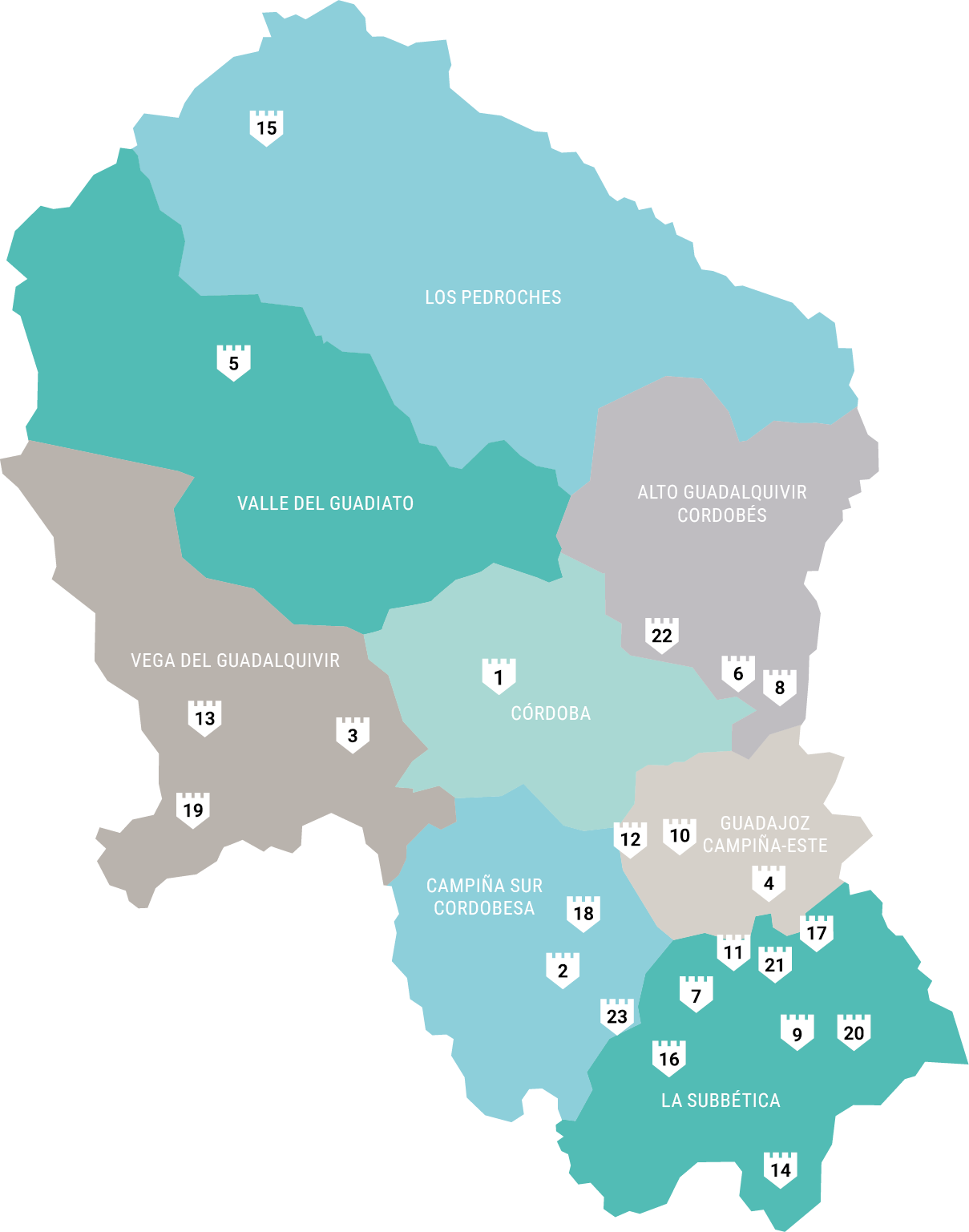
Discover the complete defensive network. Click on the map numbers or use the search bar below.